Table of Contents
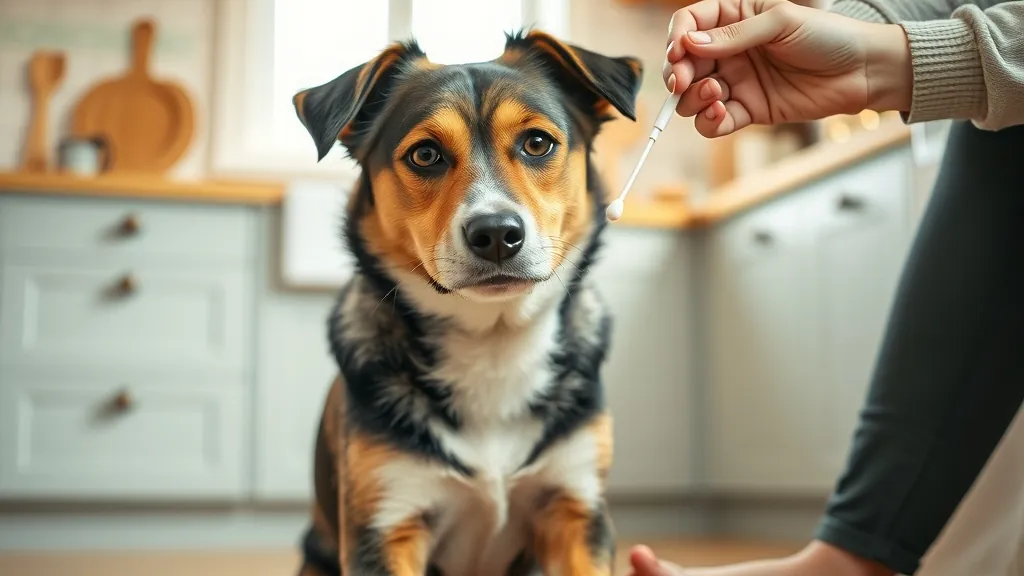
The question I got most at the shelter front desk wasn’t “is he healthy?” It was “what is he?” People wanted a breed name, and they wanted it to explain everything: why the dog pulled on the leash, how big he’d get, whether he’d be good with their kids. Now a $100 cheek swab promises that answer. Some of what comes back is genuinely useful. Some of it gets read as far more certain than it is, and that gap is where owners make bad calls in both directions.
Most articles on this topic split results into a tidy “can” list and “can’t” list. I don’t think that’s how it works in practice. Every part of a DNA report sits somewhere on a sliding scale of confidence, so that’s how I’ve laid this out: from the results I’d put in a vet chart without a second thought down to the ones I’d ignore.
This is general information, not veterinary advice. A DNA test doesn’t diagnose, treat, cure or prevent any disease. If your dog has symptoms, or a result comes back “at risk,” talk to your veterinarian before you change anything.
The short answer
| Result | How much to trust it |
|---|---|
| Single-gene drug sensitivity (MDR1) | High. Worth putting in your dog’s chart. |
| Carrier status for breeding decisions | High, for well-studied variants in the breed they were found in. |
| Major breed components (roughly 25%+) | Fairly high. |
| Relatives who tested with the same brand | Fairly high for close relatives. |
| Trace breeds (around 5–10%) | Low. A best guess. |
| “At risk” disease markers | Varies a lot. Often unknown odds. |
| Adult size predictions | Rough. Diet and neutering timing matter too. |
| Personality and behavior | Very low. |
| Current health, hips, most cancers, allergies | Not something these tests measure. |
The solid end: single-gene results with a clear meaning
The most useful line in many reports is also the least exciting one. MDR1 (also called ABCB1) is a gene variant that affects how well a dog keeps certain drugs out of the brain. Washington State University’s veterinary pharmacology lab, which identified the mutation, notes that dogs with it can have neurological reactions to drugs such as high-dose ivermectin (used for mange, not the low heartworm-prevention dose) and loperamide, the active ingredient in Imodium. It’s common in collies, Aussies and other herding breeds, and it turns up in mixes too.
That’s a result with a direct action attached: tell your vet, and they flag it before prescribing or before anesthesia. At the shelter we couldn’t test every intake dog, so anything that looked even slightly collie-ish got treated cautiously by default. A swab result replaces that guess with an answer, and for a scruffy mix nobody would pick out as part herding dog, that’s the whole value of the test.
Carrier status belongs here too, with one condition. If you’re breeding, knowing that a dog carries one copy of a recessive variant lets you avoid pairing two carriers. That’s what these tests were originally built around, and for well-studied variants in the breed where they were discovered, it works.
Fairly solid: the big breed percentages and close relatives
If your report says your dog is 45% Labrador and 30% German shepherd, you can take that seriously. Large blocks of ancestry are the easiest thing for these labs to call, because there’s a lot of matching DNA to compare against their reference panels. Wisdom Panel says its panel covers 430+ breeds and Embark says 400+.
Relative matching is also reasonably dependable for close family, with an obvious limit: it only finds dogs who tested with the same company. Embark says 94% of tested dogs match at least one relative. I’d still call this the fun part of the report rather than the important part, but I’ve watched two adopters figure out their dogs were littermates from the same shelter intake, and that was a good day.
Shaky: trace breeds
The bottom of a breed list is where I’d stop reading closely. Embark says it can detect breed contributions down to 5%, and independent explainers generally agree the small percentages are the least reliable part of any report. There’s a real reason for that: with a shelter mix, there’s no pedigree to check the answer against. Nobody knows whether that 6% “Chihuahua” is a great-great-grandparent or noise.
So if a small trace breed surprises you, don’t build a story around it. And if you want an answer key, you won’t get one from a second brand either, since the companies use different panels and methods.
Highly variable: “at risk” health markers
This is the section of a report that scares people, and it’s the one I’d most like owners to read slowly.
A health marker tells you your dog carries a gene variant that’s been linked to a condition, often in one particular breed. It usually doesn’t tell you the odds your dog actually gets sick. Researchers call this penetrance, and for many markers it’s low or unknown.
Degenerative myelopathy is the classic example. The UC Davis Veterinary Genetics Laboratory describes the SOD1 variant behind it as inherited with incomplete penetrance, meaning not every dog with two copies develops the disease. Embark’s own breeder resources say many at-risk dogs live long lives without it. Some research in German shepherds has suggested higher penetrance, which tells you the risk depends on breed and population too. A large 2023 study in PLOS Genetics of more than one million dogs genotyped by Wisdom Panel found that 57% carried at least one copy of a disease-associated variant they screened for. If more than half of dogs carry something, a carrier result alone can’t mean much is wrong.
What to do with an at-risk result:
- Book a normal appointment with your vet and bring the report. Don’t panic-buy supplements.
- Ask whether the marker has been studied in your dog’s breed mix, or only in a breed your dog is a small part of.
- Ask whether a confirmatory test or a baseline exam is worth doing now.
- Some companies offer a genetic consult for at-risk results; Wisdom Panel includes one with its Premium tier. Use it, but your vet still makes the call.
Also know that consumer pet DNA tests aren’t reviewed by the FDA before they’re sold, and researchers have been raising concerns about that in journals like Nature since at least 2018.
Rough at best: adult size and physical traits
Some reports include a predicted adult weight or coat traits. Coat color and furnishings genes are well understood, so those calls are often right. Weight is a different matter. Your puppy’s adult size also depends on diet, activity and when they were spayed or neutered, and a mix of two medium breeds can land almost anywhere. Use it as a rough range, not a reason to buy a crate size.
The far end: what a DNA test basically can’t tell you
Personality and behavior. A 2022 study in Science by Morrill and colleagues surveyed owners of more than 18,000 dogs and found breed explained only about 9% of the variation in behavior between individual dogs. I believe it. I’ve held a dozen “high-drive herding mixes” who slept through their entire intake exam. If your dog has a behavior problem, a trainer or a veterinary behaviorist will help you far more than a breed pie chart.
Current health. A DNA test reads the genes your dog was born with. It doesn’t see an ear infection, a heart murmur, kidney values or extra weight.
Complex conditions. Most of what actually brings dogs into a clinic, such as hip and elbow dysplasia, most cancers, skin allergies and obesity, involves many genes plus environment. A “clear” report is not a clean bill of health, and it doesn’t replace annual checkups.
Can a dog DNA test be wrong?
Yes, in a few ordinary ways. A swab taken right after a meal or a lick of another dog’s face can fail or need a redo; wait an hour or two after food and aim for the cheek pocket. Lab reference panels also change over time, so a report can shift slightly as a company updates its database. The bigger risk isn’t the lab making a mistake. It’s an owner reading a 6% trace breed or an at-risk marker as a firm verdict.
So is it worth buying?
I’d buy one for a mixed-breed dog if the breed answer would genuinely satisfy your curiosity and you’d hand the MDR1 and other drug-related results to your vet. I wouldn’t buy one to explain a behavior problem or to replace a health workup. When I checked prices on October 22, 2026, Wisdom Panel Essential was $95.99 on sale and Embark Breed + Health was $139 on sale. These kits run near-constant promotions, so check the current price on the company’s own site before you buy. Over a 12-year life even the pricier kit works out to about 3 cents a day, so cost isn’t really the question. Whether you’ll use the answer is.
If you’re choosing a kit, my Embark vs Wisdom Panel comparison puts the two side by side, and I’ve reviewed each in full: Embark and Wisdom Panel.
How I put this together
This guide draws on my years doing shelter intake, the UC Davis Veterinary Genetics Laboratory and Washington State University’s published guidance, the peer-reviewed studies named above, and each testing company’s own public claims, which I’ve labeled as theirs. I haven’t sent a kit to either lab for this article. No company paid for placement or saw this before publication.
Owners ask
Can a dog DNA test be wrong?
Yes. The big breed percentages are usually the most dependable part, while small trace breeds at the bottom of a report are the least. Health results can also be misread: an at-risk marker is not a diagnosis, and a clear result doesn't rule out common problems that aren't caused by a single gene. A poor swab can also fail and need a redo.
What are the limitations of dog DNA testing?
A DNA test can't tell you your dog's current health, personality or most behavior, and it can't predict complex conditions like hip dysplasia, most cancers or skin allergies. For many disease markers nobody knows how often carriers actually get sick. Consumer pet DNA tests are also not reviewed by the FDA before sale.
How accurate are dog DNA tests really?
Nobody has published an independent head-to-head accuracy study of the consumer brands. Companies make their own accuracy claims; Embark, for example, advertises 99% breed ancestry accuracy. For a mixed-breed dog there's no answer key to check against, so treat the large percentages as reliable and the small ones as a best guess.
Can a dog DNA test show if two dogs are related?
Often, yes. Embark's relative finder matches dogs who tested with Embark, and the company says 94% of tested dogs match at least one relative. It only works if the other dog took the same brand's test. For formal parentage verification, breeders usually use a dedicated parentage test from a lab such as UC Davis.
Is a dog DNA test worth it for a mixed-breed dog?
It can be, if you want the breed answer and you'd use a drug-sensitivity result like MDR1 in your vet's chart. It's a weaker buy if you're hoping it will explain behavior or predict whether your dog will get sick. This isn't veterinary advice; your vet can tell you whether any result changes your dog's care.
PawBudget may earn a commission if you buy through links here — it never changes a verdict. Not veterinary advice; ask your vet about anything health-related.